Pick and Reserve Storage: How to Zone a Warehouse
Pick and reserve storage is the split between stock you pick from every day and stock you hold in bulk until the pick locations need refilling. Getting that split right affects how far your team travels, how often they replenish and how much of the floor each system takes up.
This guide covers how to sort stock into zones, match equipment to each zone and plan the replenishment between them. For the equipment choice itself, see do you need shelving or pallet racking?
What each zone does
| Reserve storage | Pick storage | |
|---|---|---|
| Holds | Bulk stock, usually full pallets | Stock set out for picking orders |
| Accessed | Less often, mainly to replenish | Constantly, by the picking team |
| Priorities | Space efficiency, safe pallet handling | Speed, easy access, short travel distances |
| Equipment to assess | Pallet racking | Shelving, carton live storage, or the lower levels of racking |
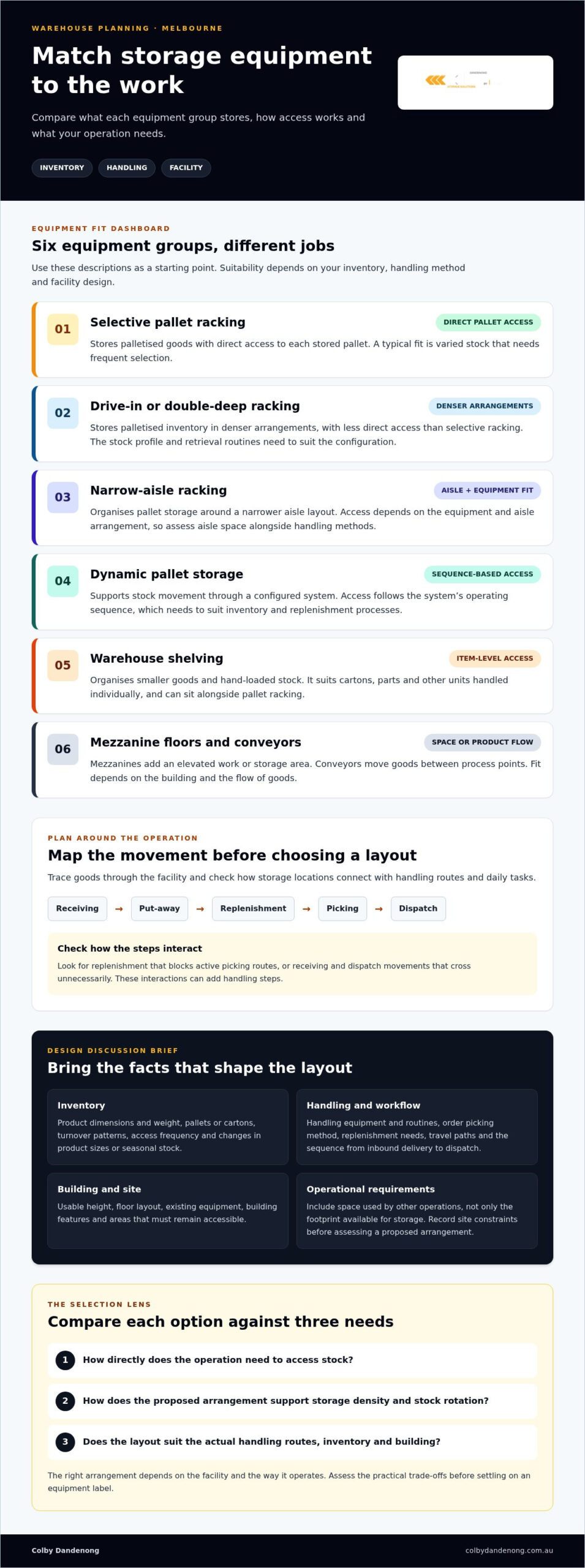
The same racking can serve both. A common arrangement in selective pallet racking is to pick from the lowest level and hold reserve pallets above it. Whether that suits you depends on what you pick and how.
Step 1: Sort stock by how often it’s picked
List your product lines against how often each is picked. An ABC analysis does this: A lines are picked most, C lines least. Use a few months of order data, not a guess.
- Fast movers belong close to the packing area. See Tip 4 in how to optimise your warehouse.
- Slow movers can sit in reserve, further from packing, as long as they can still be reached when needed.
Step 2: Choose the pick unit
Decide whether people pick full pallets, cartons or single items from each location. Pallet picks can come straight from racking. Cartons and small items usually suit shelving or carton live storage. Mixed operations often need more than one pick method.
Step 3: Plan replenishment
Replenishment is where mixed layouts usually go wrong. Work out:
- How often each pick location needs refilling, and how much stock it holds
- The route from reserve to pick, and whether it crosses active picking aisles
- Who does it, and whether it can happen outside peak picking times
- How stock changes level, if you use a mezzanine. A conveyor is one way to move goods between a mezzanine and the floor, as covered in how a conveyor system can help your warehouse.
Step 4: Check the plan against the building
Check clear height, columns, doors and aisles on site before you commit. Forklift routes matter in particular. See forklift compatible racking. If the plan changes the racking layout, check the design against AS 4084:2023 and WorkSafe Victoria guidance.
Common problems to avoid
- Fast-moving stock stored far from packing
- Pick locations too small, so staff refill constantly
- Replenishment trucks blocking aisles during picking
- Reserve and pick zones sharing one narrow route
Plan your zones with Colby Dandenong
Bring your order data, product dimensions and a site plan. See our warehouse storage solutions or contact Colby Dandenong to discuss your layout.
Frequently Asked Questions
What is the difference between pick and reserve storage?
Pick storage holds stock set out for picking orders. Reserve storage holds bulk stock until pick locations need refilling.
Can the same racking be used for both?
Yes. In selective pallet racking, the lowest level can be a pick level, with reserve pallets above it. It depends on your products and how orders are picked.
How often should pick locations be replenished?
There’s no fixed rule. It depends on how fast the line sells, how much the location holds and how your team works.
Do I need a mezzanine for pick and reserve zones?
No. A mezzanine adds an elevated work or storage area, which can help if floor space is the limit. See what a mezzanine floor can be used for.