Narrow Aisle Racking Requirements: What Your Melbourne Warehouse Needs First
Narrow-aisle racking only works when the building, the truck and the stock all agree. If one of them doesn’t, the extra pallet positions on the plan won’t survive contact with the floor.
This guide covers what to confirm before a narrow-aisle layout is specified. For what the system is and why warehouses choose it, see the benefits of narrow aisle pallet racking. For the system itself, see our narrow aisle pallet racking page.
Table of Contents
- Start with the truck, not the aisle width
- What the building must allow
- What your stock and workflow must allow
- Compliance and ongoing safety
- What to bring to a site review
Start with the truck, not the aisle width
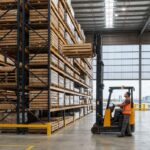
Narrow aisles are worked by turret or swing-reach trucks, not standard forklifts. The aisle is sized to suit the truck and the load, with enough clearance to turn the pallet. That means the truck comes first and the aisle follows it. There is no standard aisle width to copy. Get the operating requirements from the truck manufacturer or an equipment advisor like Nortruck Forklifts, then have the layout checked against them.
What the building must allow
Check these before any rack is positioned:
- Clear height: Narrow aisle suits taller buildings, and the usable height shapes how many levels fit.
- Columns and obstructions: These can interrupt rack runs or limit where trucks can travel.
- Doors and cross-aisles: Trucks need a clear route in and out of each aisle.
- Floor condition: Narrow-aisle trucks have manufacturer requirements for the floor they run on. Get those confirmed against your slab before the layout is finalised.
What your stock and workflow must allow
Narrow aisle keeps every pallet individually accessible, which suits a varied stock profile. If density is your only goal, a denser system may cost less. Our guide to density vs selectivity in pallet racking explains the trade-off, and choosing the right pallet racking helps you compare systems.
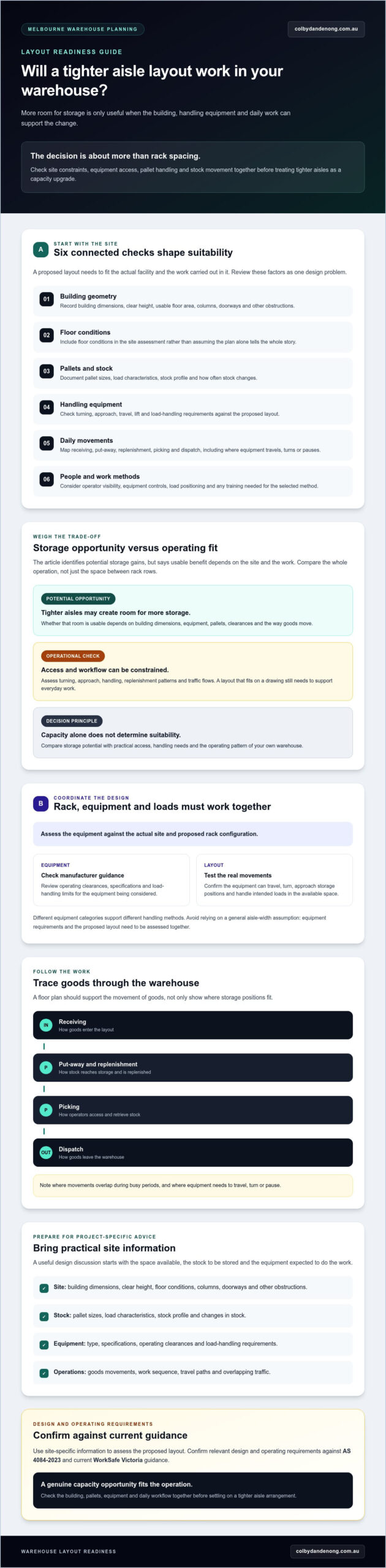
Record pallet dimensions and weights, including the odd sizes, not just the typical pallet. Then map receiving, put-away, replenishment, picking and dispatch. Note where trucks share aisles or wait for each other during busy periods.
Compliance and ongoing safety
Confirm requirements against AS4084-2023 and WorkSafe Victoria guidance, and with appropriately qualified Victorian practitioners. A generic layout doesn’t confirm what applies to your site. Colby racking is Australian-made, seismic-rated, engineered and tested. See our seismic racking page for how that applies to your project. Once installed, regular racking safety inspections keep the system in check.
What to bring to a site review
- Building plans and measurements, including clear height, columns and doors
- Truck specifications, current or planned
- Pallet and load details, including variation
- A description of how stock moves through the warehouse
- A note of anything you’re unsure about, so it can be confirmed on site
Request a quote or site inspection with your plans and truck details, and the Colby Dandenong team can tell you what your site will and won’t support.
Frequently Asked Questions
Can my existing forklift work in a narrow aisle?
Standard forklifts generally can’t. Narrow-aisle layouts use turret or swing-reach trucks. Check the manufacturer’s specifications against your proposed layout.
How wide should a narrow aisle be?
It depends on the truck, the load and the pallet dimensions. Take the operating clearances from the manufacturer and have the layout reviewed for your site.
Does narrow-aisle racking need a special floor?
Narrow-aisle trucks have floor requirements set by the manufacturer. Confirm them against your slab before the layout is specified.
Is narrow aisle right for every warehouse?
No. Building height, floor, stock mix and workflow all matter. Our benefits and drawbacks guide covers when it fits and when it doesn’t.