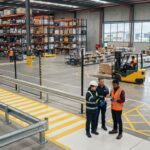
A useful inspection report helps warehouse teams decide what to address, where and how to track follow-up. In Victoria, WorkSafe Victoria recommends inspecting industrial storage systems at least every six months, while AS 4084:2023 calls for frequent checks for damage and overloading, plus an annual integrity check.
Regular checks help identify damage, overloading and changes in condition before they affect warehouse operations. Staff checks and formal inspections have different roles: routine observations can flag emerging issues, while a formal assessment records the system’s condition and prioritises corrective action.
This article explains how to use warehouse racking inspection findings in Victoria to understand risks across storage systems and plan corrective action. It also considers how system type, layout, traffic and access affect the inspection scope, giving you a practical basis for reviewing findings and deciding what to address next.
Use inspection findings to guide practical decisions across the warehouse. Organise records by storage system and location, and link corrective actions to how each area operates. A clear process helps teams coordinate follow-up and plan future storage changes.
Table of Contents
Why Are Pallet Racking Safety Inspections Important?
Inspections help identify damage, overloading and unsafe loading before affected bays remain in use. Findings guide decisions about restricting access, repair, replacement or further assessment, according to the condition and severity of each issue.
Racking component checks
An inspection examines frames, uprights, beams, bracing, connections, baseplates and anchors. Look for bending, twisting, cracks, loose connections, missing components or signs that members have shifted from their intended position. Damage to one part can affect how forces transfer through the surrounding structure, so assess the complete affected section rather than viewing a defect in isolation.
Prioritise action by considering the component, its location and the apparent extent of damage. A damaged upright near a loaded beam calls for a different response from a surface mark on a non-critical member. Restrict access and loading around a suspect area while it is assessed. This allows the assessor to examine it without further handling changing its condition.
Forklift and pallet-loading damage
Forklift impacts can leave dents, bends or scrapes on uprights and bracing. Even an apparently minor impact should be reported and assessed promptly: visible marks alone cannot show whether a component remains suitable for use. Keep further loading away from the affected section until its condition and the required response are determined.
Incorrect pallet loading creates another source of stress. A damaged or poorly positioned pallet, or an unstable load, may not sit correctly on its supporting beams. Uneven placement can concentrate loads or bring goods into contact with nearby racking. Check the pallet, load position and support points together. Overloading or unsuitable pallets can compound existing damage.
Damage severity and response actions
Classify findings by severity, then match each category to a response. Acceptable damage can be reviewed at the next inspection within 12 months. Hazardous damage requires corrective action, and if repairs are not completed within 4 weeks, it must be reclassified as very serious. Frame damage exceeding the limits by a factor greater than 2 is very serious and requires immediate attention.
WorkSafe Victoria advises that very seriously damaged pallet racking should be off-loaded immediately and repaired before reuse. Damaged components may need replacement rather than repair. Repairs and modifications must be conducted by a competent person under Clause 5.6 of AS 4084:2023. Keep the affected section out of operation until the required work is complete and its safe use has been assessed.
Formal inspection frequency and routine staff checks
Formal inspections provide a structured assessment, while staff checks help identify changes between assessments. Both should reflect how the warehouse operates.
Formal inspections
AS 4084:2023 addresses checks for damage and overloading, as well as assessment of racking integrity. Formal racking inspections should be conducted by a competent external person. High-traffic areas may need closer attention because forklift movements can increase exposure to impact damage.
The cost of a warehouse racking inspection in Victoria depends on the scope, site size, access needs and reporting requirements. The fee is provided after a quote request, based on the work required at the facility.
Routine staff checks
Visual checks can help staff notice emerging issues during normal operations. A walk-through, for example, may reveal a displaced beam, a leaning frame or a pallet obstructing an aisle. Staff should know how to report concerns and who receives them, so observations reach someone able to arrange an assessment.
An internal checklist can record the aisle, bay, visible change and date observed. Businesses can set check processes to suit their operating conditions. Report a forklift strike or suspected overloading promptly rather than waiting for the next planned round.
Structural and safety audit checks
A racking audit considers structural condition alongside how the system is used. Checks can include frames, beams, bracing, connections, anchors, load signs and aisle access. The assessment also considers whether the installed arrangement matches available load information and whether handling practices are causing recurring damage.
For a formal inspection in Melbourne or regional Victoria, engage a competent external person with relevant racking inspection experience. The report should identify the systems assessed, findings and recommended actions. This makes it easier to assign follow-up work and maintain a consistent record for later reviews.
Warehouse system component checks
Where a facility uses powered storage or handling equipment, inspections can cover motors, sensors, bearings and lubrication systems. A fault in one component may affect equipment operation, so record visible wear, damage or unusual performance for assessment. Set the inspection scope according to the equipment at the site.
Cleaning and recalibration can help prevent dust and debris from affecting equipment performance or causing premature wear. Include these tasks in the maintenance process where relevant, and record completed work. For example, a sensor that performs inconsistently after dust builds up needs attention as an equipment issue, separate from the racking condition assessment.
Victoria’s workplace safety obligations for pallet racking
In Victoria, workplace requirements combine occupational health and safety duties with Australian Standard guidance for steel storage racking. The practical focus is safe operation, clear load information and documented inspection actions.
Workplace safety obligations
The Occupational Health and Safety Act 2004 is the Act referenced for Victoria, according to Victorian Legislation. AS 4084:2023 is the Australian Standard for steel storage racking, with Part 2 covering operation and maintenance. Under this framework, the user of storage racks is responsible for regular inspections and managing identified hazards.
Victoria has no standalone law specifying a fixed inspection interval for pallet racking. However, a competent person should formally inspect the system every 12 months. The inspection schedule and follow-up actions should reflect the installation’s condition, use and any damage reports.
Safety signage and load ratings
Load signage communicates the safe working load for the installed configuration. Signs should be visible to workers operating the racking, with the safe working load sign located approximately 2 metres above the floor. The sign’s information needs to match the actual beam arrangement and loading pattern.
A configuration change can alter safe working loads. Obtain supplier approval before changing beam levels or other structural arrangements, then update the displayed information. Missing or unclear signage makes it harder for forklift operators to judge permitted loads, so record it as an inspection finding and arrange corrective action.
Pallet loads and racking clearances
Inspectors assess whether each pallet is suitable for its load and sits securely on the supporting beams. Timber, plastic and steel pallets all need consideration during a safety review. A broken pallet, unstable load or overhanging goods can affect clearance and create contact risks during loading.
Check beams and uprights for damage, displacement or changes to their arrangement. Confirm pallets are positioned consistently and do not obstruct aisles or contact adjacent loads. Footplates in Victoria require at least 2 anchors each. Racking splices should sit above the first beam level and not below 1.5 metres.
Annual inspections and load stability
A competent person should formally inspect pallet racking every 12 months. The inspection considers structural integrity, recorded damage and safe use, including whether the installed arrangement still suits current pallet loads. This assessment helps identify issues requiring repair or component replacement.
Load stability also depends on pallet condition, load distribution and placement in each bay. Check for leaning loads, damaged pallets and goods extending beyond the intended support area. Record unstable loads and missing components as findings, then assign action before the affected location continues operating.

Bay-by-bay inspection reports and risk ratings
A useful report links each finding to a specific location within the installation. This makes the assessment easier to prioritise, action and revisit.
Bay-by-bay findings and risk ratings
Each entry should identify the aisle and bay, the affected component, and the observed condition. For example, “Aisle B, Bay 12, lower upright” is more actionable than “frame damage”. The report describes the installation’s general condition and lists measures according to damage severity and repair urgency.
A competent inspector can link each finding to an appropriate response category. This helps warehouse managers distinguish an area needing immediate attention from a defect scheduled for repair. Clear location details also help maintenance staff find the right bay without searching along a long run of racking.
Risk categories and inspection photographs
Risk categories help explain the condition and the response required. A report may distinguish acceptable, hazardous and very serious damage, with each finding linked to a recommended action. The category should appear alongside the affected component so readers understand why a bay needs repair, restriction or further assessment.
Photographs add useful visual context to a written record. A wider image can show the aisle and bay, while a close-up can show a bent brace, damaged upright or beam connection. Captions should identify the location and component, helping staff match images to the report and track the issue after repair.
Report documentation
For consistency, inspection documentation should identify the inspection date, the area assessed and the method used to locate findings. AS 4084.2:2023 section 5.5 describes damage-recording steps. A report can use a site map, aisle references or bay identifiers to make those records practical across a large installation.
Record each finding with its risk category, recommended action and repair urgency. For a loaded bay, document any restriction or unloading action needed before further use. Keep repair records with the original assessment, including component replacement details and follow-up findings. This creates a traceable history for later reviews and helps confirm that recorded defects were addressed.
Review the report with warehouse supervisors and maintenance staff. Assign each action to a responsible person, then track its status against the affected bay. Consistent records can reveal recurring damage patterns, such as repeated impacts in one aisle, and help inform operational controls.
Inspection of different storage systems
Inspection methods should reflect how each storage system supports loads and operates. A competent person assesses the equipment, its use and access conditions.
For steel pallet racking, checks focus on frames, beams, bracing, connections and anchors. The formal inspection interval is 12 months, with additional checks for damage and overloading. A forklift impact on an upright, for example, needs assessment alongside the loading conditions and surrounding components. Inspection records should identify the affected bay and required action.
Access matters in high-bay storage. Where pallet racking is more than 8 metres high, an elevating work platform should be used to inspect upper levels. This allows the inspector to assess components that cannot be viewed clearly from the floor. Bracing condition, connections and visible deformation can then be recorded at the relevant height.
Pallet live storage and a Rapid Runner Satellite System need checks suited to their moving or guided components. Inspect the structure, pallet support areas and visible damage that could affect product movement. For satellite equipment, include its operating condition and interface with the racking. Compare the installed arrangement with the manufacturer’s information when assessing components or changes.
Conveyor systems require a different inspection focus from static storage. Checks can include motors, sensors, bearings and lubrication systems, alongside visible damage and the condition of moving parts. Dust and debris can affect equipment performance, so cleaning and recalibration help maintain operation. Assess the conveyor in context, including transfer points near racking or pallet handling areas.
Shelving inspections focus on shelves, supports and connections, as well as signs of overloading or impact. For any system, note whether goods obscure components or prevent safe inspection access. In a warehouse combining shelving, pallet racking and conveyors, identify findings by system and location instead of grouping them into one general observation.
Keep the inspection scope specific to each system and its operating conditions. Record findings separately so a damaged racking upright is not confused with a conveyor fault or shelving issue. The report should identify the component, location, observed condition and required response. This gives warehouse teams a clear basis for coordinating repairs and maintaining storage operations.
Arrange an inspection of your warehouse storage systems.
Colby Dandenong: Warehouse Safety Solutions
Colby Dandenong provides Warehouse Safety Solutions for businesses reviewing storage risks, inspection findings or changes to warehouse operations in Melbourne and Victoria. The service can help when a report identifies recurring damage, unclear load information or areas needing a considered safety response. Start by identifying the issue, its location and how it affects the system’s operation.
For pallet racking, the response may involve addressing a damaged or unsuitable arrangement, reviewing how loads are stored or planning a different configuration. Let the findings guide the decision. A report identifying frequent forklift impacts, for example, may prompt a review of how the affected aisle is used and whether the layout suits current operations. Any racking change must account for the specific configuration and load information.
Selective Racking may be relevant where workers need direct access to individual pallet positions. It can suit operations managing varied stock and frequent picking, where access to each stored pallet matters. The design still needs to reflect the warehouse’s loads, equipment and aisle arrangement. Consider operating requirements before treating an access-focused configuration as suitable.
Drive-In Racking may suit a storage pattern where forklifts enter the rack structure. Its operation differs from a system offering direct access to every pallet position, so an assessment should consider how stock is placed and retrieved. Review forklift movement, pallet condition and the storage layout together.
Double Deep Racking may suit a plan that stores pallets two positions deep, with access to the rear position affected by the pallet in front. This arrangement can change retrieval sequences and the equipment needed to handle pallets. Review expected stock movement, load details and access methods together before deciding whether the layout suits the operation.
These options address different operational needs; none is a universal answer to an inspection finding. When considering a configuration change, assess affected loads, clearances, equipment and operating procedures as one system. This links the safety issue to a practical storage decision instead of treating the rack, forklift and pallet as separate concerns.
Contact Colby Dandenong to discuss your warehouse safety requirements.
Make inspection findings part of your next decision
An inspection is also a useful opportunity to review changing storage demands. New product lines, altered pallet loads or different forklift movements can affect whether the current layout still suits daily operations. Treat these changes as a reason to revisit the system’s configuration and how teams use it, rather than waiting for a problem to arise.
Keep inspection records alongside decisions about future warehouse changes. They give managers a practical reference when planning adjustments, reviewing risk controls or arranging a further assessment. For warehouse racking safety inspections in Victoria, connect the findings with the site’s operating needs and planned changes.
Colby Dandenong can discuss how its Selective Racking, Drive-In Racking and Double Deep Racking relate to different storage requirements. Contact Colby Dandenong about an inspection to discuss your warehouse requirements and next steps.
Frequently Asked Questions
What Happens if Your Racking Needs Repairs?
The affected area is assessed, and repair work is prioritised according to the damage and risk. If a section is very seriously damaged, WorkSafe Victoria advises unloading it immediately and repairing it before reuse. Repairs or modifications must be carried out by a competent person under Clause 5.6 of AS 4084:2023. Keep the assessment and repair details together so the work can be tracked and reviewed.
What Is AS 4084:2023?
AS 4084:2023 is the Australian Standard for steel storage racking. Part 1 covers design, while Part 2 covers operation and maintenance. For warehouse operators, this provides a reference for managing racking throughout its use, not only at installation. For example, an alteration to a beam arrangement should be considered alongside the system’s design and load information before the changed configuration is used.
What should I do if I find damaged racking?
Report damage to your employer immediately, as WorkSafe Victoria advises. If a forklift strikes a frame or beam, identify the affected bay and prevent further loading while it is assessed. Don’t attempt an improvised repair or return a damaged component to service. A clear report of the location, impact and visible changes helps the assessor determine the appropriate response.
Who is a “Competent Person”?
A competent person has the knowledge and experience to inspect racking, assess damage and recommend an appropriate response. For a formal inspection, the person should be external to the business, as described in the inspection guidance. Their assessment should identify affected components and distinguish damage requiring urgent action from findings that can be monitored. Repairs and modifications also require a competent person.
Who is responsible for pallet racking compliance in a warehouse?
The user of the storage racks is responsible for carrying out regular inspections. In practice, the warehouse operator needs a process for receiving damage reports, arranging assessments and tracking corrective work. For example, a reported impact should reach someone with authority to restrict use of the affected bay. Assigning responsibilities helps prevent inspection findings from being overlooked during shift changes or routine operations.
What Australian standards apply to warehouse racking safety inspections in Victoria?
AS 4084:2023 applies to steel storage racking, with Part 2 addressing operation and maintenance. It should be considered alongside Victoria’s workplace safety framework, including the Occupational Health and Safety Act 2004. The applicable requirements should be read against current AS 4084-2023 and WorkSafe Victoria guidance, particularly when a system is altered or its loading arrangements change.
How often should warehouse racking be inspected in Victoria?
WorkSafe Victoria recommends inspecting industrial storage systems at least every six months. AS 4084:2023 calls for frequent checks for damage and overloading, plus an annual integrity check. A competent person should formally inspect pallet racking every 12 months. High forklift traffic or recurring impacts can warrant more frequent attention between formal inspections, based on the warehouse’s operating conditions.
Who is qualified to inspect warehouse racking in Victoria?
A formal racking inspection should be conducted by a competent external person with the knowledge and experience to assess the system and its damage. The report should identify specific locations and components, explain the severity of findings and set out practical response actions. This helps the warehouse operator direct repairs to the right areas and retain a useful record of the assessment and follow-up work.