How to Plan Pallet Racking Repairs Without Stopping Your Warehouse
When an inspection finds damage, the repair has to fit around picking, replenishment and dispatch. A clear plan keeps crews safe and keeps unaffected areas working.
This guide covers how to organise pallet racking repairs around live operations. For the inspection itself, see our pallet racking safety inspections service. To get ready for one, see how to prepare for a pallet racking inspection.
Start with the inspection report
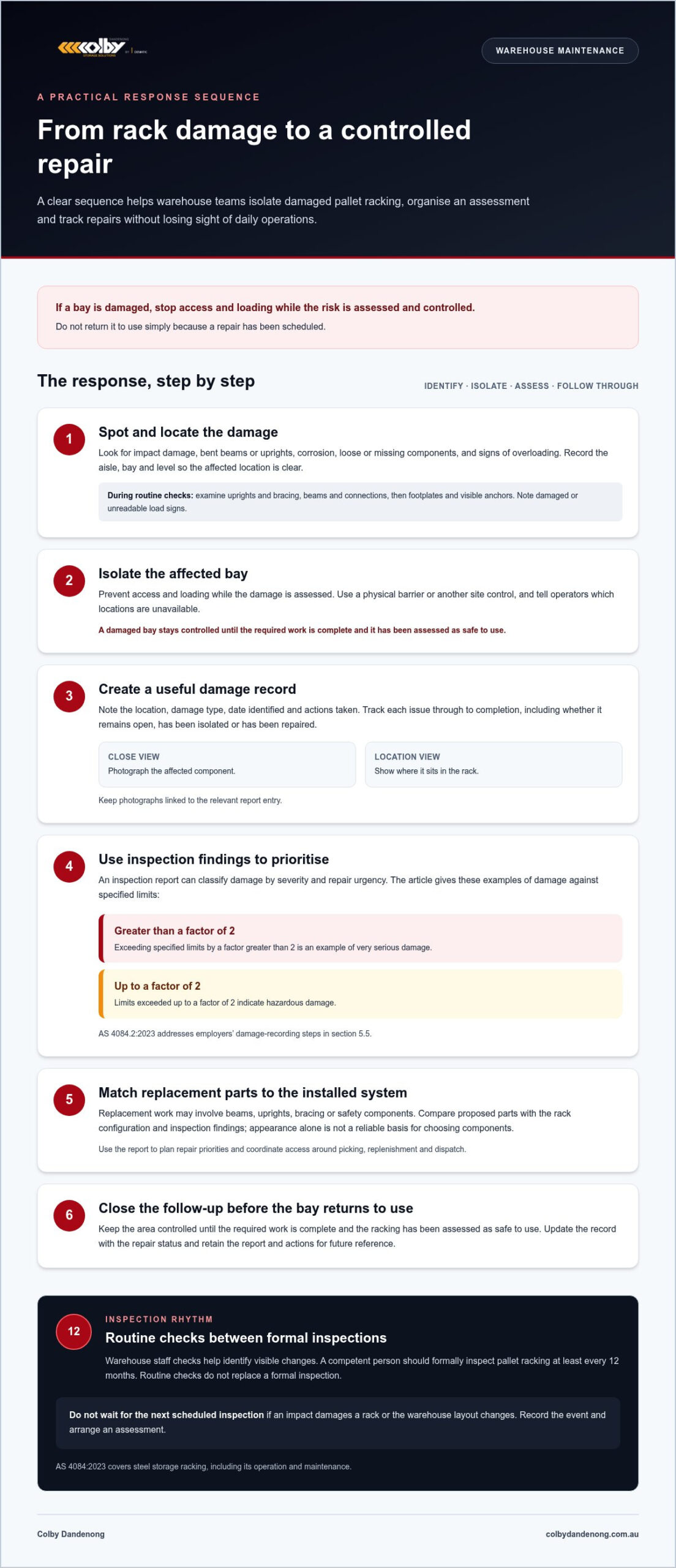
Inspection reports usually rank damage by severity, and many use a green, amber and red scale. Ask your inspector how their ratings work and which items need action before the bay is used again. The plan below follows that order, not the order the bays appear in the warehouse.
Take affected bays out of service
- Stop loading the bay and unload it as your inspector directs.
- Put a physical barrier around it and tell operators which locations are unavailable.
- Record the aisle, bay and level, and what the damage looks like.
Don’t return a bay to use because a repair has been booked. It stays out of service until it’s been assessed as safe.
Group the work and choose the window
- Mark each affected bay on the warehouse layout.
- Group repairs by aisle so a crew isn’t moving across the site.
- Match each job to site activity. A low-use aisle may suit a quieter period, while a busy picking location may need staged access.
- Keep any aisle open only if it is clearly separated from the work zone and its traffic controls.
Agree access before the crew arrives
| Agree with your supervisor | Why it matters |
|---|---|
| Work area and exclusion zone | Stops the repair area becoming a through-route |
| Forklift and pedestrian routes | Operators need the same updated instructions as pickers |
| Where stock will be held | Unloaded pallets need somewhere safe and accessible |
| Site contact and induction | Crews can find the bay and start without delay |
| Parts and who approves them | Avoids delays from missing or incompatible components |
Replacement parts must suit the installed system, not just look the same. Repairing the damaged part may also mean checking the connectors and adjoining frame.
Impact damage versus planned repairs
- After an impact: control access, arrange an assessment and keep workers clear of the section. Brief supervisors before nearby picking resumes, because routes may need to change temporarily.
- Planned repairs: use the report to build one repair list, order parts in advance and book the window against your dispatch calendar.
If an incident involved an injury or a serious near miss, check whether it needs to be reported to WorkSafe Victoria, and keep your records.
Reopen the bay and update your records
- Confirm the repair has been assessed and the bay is cleared for use.
- Record what was done, the location and the date.
- Update your layout and load information if the configuration changed.
- Tell supervisors and operators which locations are available again.
To reduce future repairs, see pallet racking protection and Is It Time To Replace Your Pallet Racking?.
Arrange an inspection or repair quote
Colby Dandenong provides brand-independent pallet racking inspections and quotes for the repairs they identify. Contact Colby Dandenong with your layout, inspection report and operating hours, and we’ll help plan the next step.
Frequently Asked Questions
Can the rest of the racking stay in use while one bay is repaired?
Often, if the work zone is separated and operators know which areas are closed. Agree the exclusion zone and routes with your supervisor first.
Should I wait for the yearly inspection to repair damage?
No. Arrange an assessment when damage is found. Waiting for the next scheduled inspection leaves a damaged bay in doubt.
Who decides when a repaired bay can be used again?
The person who assessed the repair. Your site should record that sign-off with the repair.
How long will repairs take?
It depends on the damage, parts availability and access. Ask for a time estimate when you request the quote.