Drive-In Pallet Racking Cost: How to Compare Quotes per Pallet Position
The lowest quote per pallet position isn’t necessarily the best value. A headline figure can hide differences in layout, usable capacity and what the project includes. To compare drive-in racking proposals fairly, they need the same scope and the same assumptions.
This guide explains what a cost per position figure tells you, what shapes a drive-in quote, how to compare proposals like for like, and what to send when you ask for an estimate.
What a cost per pallet position figure tells you
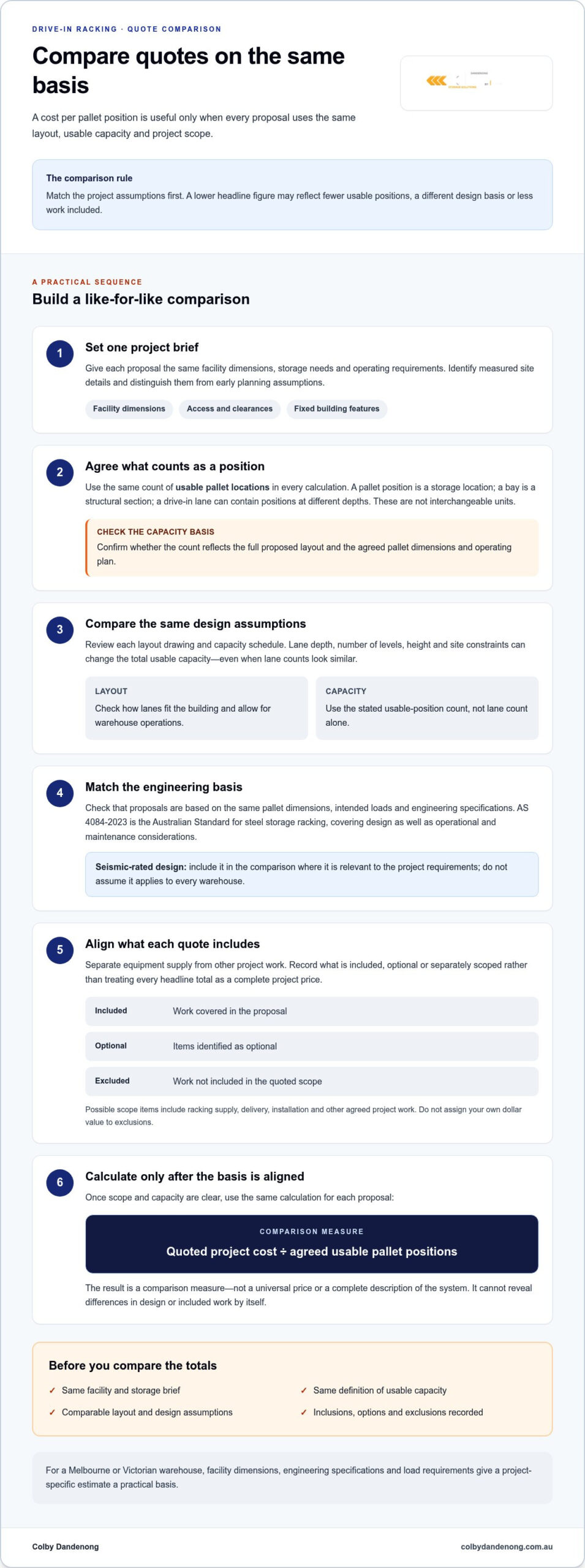
Cost per pallet position is a comparison measure: the quoted project cost divided by the number of agreed, usable pallet storage locations. It helps you compare proposals, but it isn’t a universal price or a full description of the system. It’s only useful when every figure uses the same scope and counts capacity the same way.
Position, bay and lane are different units
- A pallet position is one designated location for a pallet.
- A bay is a structural section that can contain several positions.
- A lane in a drive-in system can provide several storage locations at different depths.
Two designs might have the same number of lanes but different lane depths or levels, and so different usable capacity. Counting lanes alone hides that. The layout drawing and capacity schedule should make the position count clear. Before comparing, find out what each quote counts: every location in the full design, or only the usable positions for your pallets and operating plan?
Why a headline figure can mislead
- Scope: an equipment-only figure may cover just the racking components, while a project quote may also include engineering, delivery or installation. They aren’t comparable until the included work is aligned.
- Denominator: a lower total divided by a larger position count can give an apparently lower unit figure, even when the design, loads or included work differ.
Online figures can give context, but they don’t establish a universal Australian rate. A meaningful comparison uses project quotes based on the same facility dimensions, engineering specifications and load requirements.
What shapes a drive-in racking quote
- Site: dimensions, access points, clearances and fixed features such as columns and doors. Height and lane depth also affect the layout. The position count should come from the agreed layout and site measurements, not an assumed standard arrangement.
- Storage brief: required capacity, pallet dimensions and load requirements.
- Design basis: engineering specifications. AS 4084-2023 is the Australian Standard for steel storage racking, covering design and operation and maintenance. Seismic-rated design can be included where it’s relevant to the project, but it’s a project consideration, not a default.
- Quote scope: supply, delivery, installation and any other agreed work, shown as included, optional or separately scoped.
How to compare quotes fairly
Set up one comparison sheet and use the same rows for every proposal.
| Compare | What to record |
|---|---|
| Usable capacity | Position count, layout drawing and capacity assumptions |
| Design basis | Engineering specifications and stated load requirements |
| Supply | Racking components covered |
| Delivery | Included, optional or excluded |
| Installation | Included, optional or excluded |
| Other work | Any other agreed items, exclusions or options |
Mark exclusions clearly instead of putting your own dollar value on them. A missing item shouldn’t be treated as included. If one proposal uses a different load requirement or layout, note the difference instead of treating its figure as directly comparable.
Then check the outcome against your operation. Drive-in racking is dense, first-in last-out storage that suits large volumes of the same SKU. It’s often more expensive than selective racking per structure, but the density can reduce the floor space you need. Make sure each proposal gives the access your operation needs, and see our comparison of drive-in, double-deep and push-back racking before comparing across systems.
The lowest figure may still be the right option, but only after scope, design basis and usable capacity are aligned.
What to send when you ask for an estimate
A project brief lets the design team assess layout, capacity and scope. The more specific your inputs, the more specific the estimate:
- Site: warehouse location, plans or measured dimensions, the proposed storage area, and fixed features or access constraints
- Storage: pallet dimensions, load details, expected volumes and the number of usable positions you want
- Scope: which components you want priced, such as supply and installation, and whether you want delivery quoted separately
Label any estimated measurement or load as an assumption. Keep a dated copy of the brief and use the same brief if you compare revised layouts.
Get a project-specific drive-in racking quote
Colby Dandenong designs, supplies and installs drive-in pallet racking for warehouses across Melbourne and Victoria. Colby racking is Australian-made, and quotes are tailored to your facility dimensions, engineering specifications and load requirements, with certified installation available. Send your project details to request a quote.
Frequently Asked Questions
How is cost per pallet position calculated for drive-in racking?
Divide the agreed project cost by the number of usable pallet locations in the proposed design. The total and the position count must refer to the same layout and scope. If the total covers installation, don’t pair it with an equipment-only figure.
Does cost per pallet position include installation?
Not automatically. A figure may be based on supply alone or on a broader quote. Check each quote’s stated scope before using its figure in a comparison.
Why can two drive-in quotes have different position counts?
They may use different layouts, pallet dimensions, levels or clearance assumptions, or count locations differently. Compare the drawings and capacity schedules, and check both reflect the pallets and operation you plan.
Can I compare drive-in and selective racking by cost per position?
Yes, as one measure, not the whole decision. Use comparable scope and a clearly defined usable position count. A lower figure may not be better value if the system doesn’t give the access your operation needs.
Does AS 4084-2023 set a standard price for pallet racking?
No. It covers the design and operation of steel storage racking, not commercial pricing. A quote depends on the individual project.